
Which Soccer Stats Should Youth Coaches Track After a Loss?
Use a short soccer match review to separate chance creation from repeatable errors before changing the lineup or next practice.
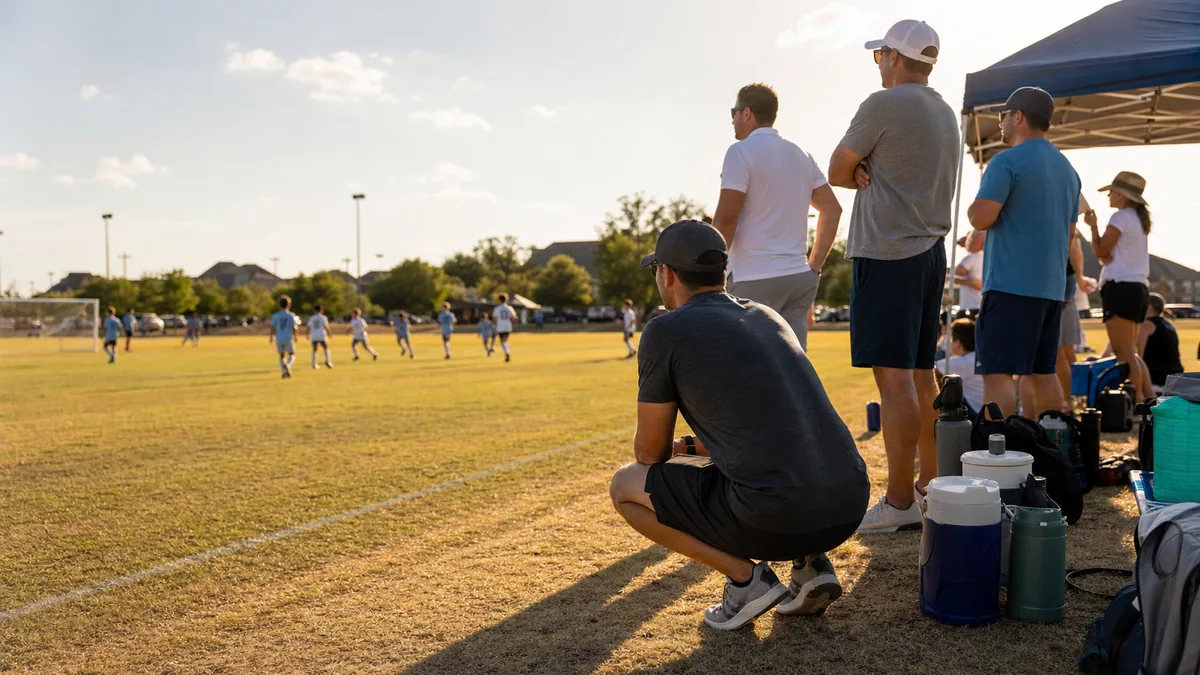
A close youth loss creates pressure to change the lineup, stop risk-taking, or blame the player connected to the mistake. That reaction is usually too fast. Start by naming the action that failed and checking whether it happened once or kept happening.
The U.S. Under-20 Women’s National Team lost 2-1 to Italy on September 6, 2026. The official U.S. Soccer match report says the USA created more danger and hit the woodwork twice, while Italy capitalized on U.S. mistakes. The report lists 11 USA shots and 4 shots on goal, compared with 14 shots and 6 shots on goal for Italy.
What should a youth soccer coach check first after a loss?
Start with the action before each goal, then check whether the team created usable chances. The final score tells you what happened. It does not tell you which practice decision comes next.
Use the Match Check after the game. Write down the score, each goal’s minute, the action before the goal, and the best attacking chances your team created. Keep the note short. You are looking for a repeatable coaching problem, not writing a match report.
A 9v9 team loses 2-1 after creating attacking chances but conceding from a turnover, rebound, or missed recovery.
Do not treat every difficult moment as the same problem. A poor shot from a good position needs a different practice from a team that never reaches the final third. A single deflection needs a different response from three failed recoveries after lost possession.
The Match Check keeps the coach from changing the formation because the score feels bad. It also keeps the coach from calling a loss unlucky when the same action keeps giving the opponent a second chance.
Which soccer stats help explain what failed?
Track a small group of match events that can change your next coaching action. Use goals, shots, shots on goal, the minute of each goal, the possession before each goal, and the player’s role when the action happened.
Shots show how often the team finished an attack. Shots on goal show how often those attempts made the goalkeeper work. Neither number explains the decision by itself, so add the action that created the attempt and the action that allowed the goal.
If your team has few shots and almost no entries into the attacking third, then keep the shape and train the pass or support run. If your team creates several clear chances but finishes poorly, then keep the buildup and train the finish.
If the team creates chances but gives up goals from the same transition or box-defense action, then keep the attacking plan and isolate that defensive action in the next practice. Do not punish the player who touched the ball last. Find the earlier action that made the mistake costly.
Record minutes and position too. A forward with 15 minutes is not comparable to a midfielder who played the whole match. Context keeps the stat from becoming a label.
Use Match Day to keep substitutions, minutes, goals, and match events in the same record. Use the goals and assists tracking guide when a helper needs a simple definition for live events. The point is a usable record that helps you coach, not a larger stat sheet.
How do you separate an attacking problem from a defensive problem?
Separate them by reviewing the possessions that produced your chances and the possessions that produced the opponent’s goals. The same 2-1 score can require two completely different training plans.
If the team cannot play through the first line of pressure, inspect spacing, support, and the first touch. A U10 or U12 group may need a smaller game with a clear forward target and enough room to recognize the pass. The goal is to make the decision appear more often, then let players solve it.
If the team reaches the final third and creates a good shot, do not replace the attacking idea because the finish misses. Give players another repetition of the same movement or final pass. The coach can correct timing, body shape, or shot selection without changing every role.
If the team loses the ball and the nearest players do not recover, train that first reaction. Use 4v4 or 5v5 with two goals so the turnover has a real consequence. Stop once to name the first recovery job, then restart quickly.
If the same box-defense mistake appears several times, keep the attacking work and change the defensive activity. The players may need to track a runner, protect the central space, or deal with the second ball before they can defend the goal consistently.
If a goal comes from one deflection or unusual event with no repeat pattern, then record it and review the next match before changing the lineup. Youth games contain awkward bounces. A coach who rebuilds the team after each one teaches players that the score controls every decision.
This diagnosis protects player development. Players can keep trying a difficult pass when it belongs to the team’s plan. The coach can still make a hard correction when the same defensive action keeps failing.
When should a loss change the lineup or formation?
Change the lineup or formation when the evidence shows a role, spacing, or workload problem that the next session cannot solve by itself. A loss alone is not enough.
Start with the team problem. If several players fail the same decision, change the activity before you change the lineup. A new formation will not teach support angles, recovery runs, or finishing choices when the players have not had enough useful repetitions.
If one player repeatedly loses the same duel while teammates make the right supporting decisions, give that player a narrower job and another chance to read the picture. If the issue follows several players across the same role, inspect the role instructions and practice design.
Bench size also changes the decision. With 10 players for 7v7, one injury can force a shape change. With 15 players, a coach may have enough cover to keep the shape and change the rotation. Record that difference before judging the player who made the visible mistake.
Playing time still matters after a loss. Do not pull a child immediately after a mistake unless safety or an agreed workload limit requires it. A planned rotation gives the player a chance to respond and keeps one bad action from becoming a punishment. Track the next shift so the review includes the opportunity the player actually received.
Use the player minutes tracker to compare the role, workload, and timing of the decision. If the player had a short shift in a difficult role, the coach needs more evidence before calling the performance a pattern.
What should the coach run at the next practice?
Repeat the most common failed action in a small-sided game. Do not turn the next session into a long speech about the loss.
Mark each goal and the two possessions before it, then repeat the common failed action in a small-sided game. Record whether the response changes. If the failed action was a lost-ball recovery, use a game that rewards the first recovery run. If it was a missed attacking support option, use a directional game that creates that option more often.
If one player needs the cue, coach that player and give the cue another repetition. If several players miss the same picture, change the space, numbers, or starting position so the group can see the decision sooner. The action changes with the diagnosis.
For a 9v9 team, keep the practice condition close enough to the match to matter. Use the outside back, wide midfielder, or central defender role when that role caused the problem. Keep the group active. A player cannot learn a recovery run by listening to a paragraph about recovery runs.
Write one note after the final game. Record the condition, the coaching cue, and whether the response changed. That note gives you a better starting point for the next match than a general line such as we need to be better.
A close loss can expose useful work. Let it show you what to teach next. Protect the players’ chance to solve the game, keep the record honest, and change only the part that the evidence supports.
FAQ
Should a youth soccer coach track possession after a loss?
Track possession only when it changes a coaching decision and the helper can record it consistently. For most youth teams, the action before a goal and the quality of chances are more useful than an estimated possession percentage.
How many soccer stats should a youth coach track?
Track a short list during the match. Goals, shots, shots on goal, minutes, positions, and the action before each goal give most coaches enough information for a next-session decision.
Should a coach change formation after losing 2-1?
Change formation only when the loss shows a repeated spacing, role, or workload problem. If the team created chances and conceded from one unusual event, keep the plan and collect another match of evidence.
Should a player come off after making a mistake?
Not automatically. Keep the planned rotation unless the player is unsafe, injured, or beyond the agreed workload. A mistake should give the coach a teaching point, not an automatic punishment.
What is the best next step after reviewing a youth soccer loss?
Choose one failed action, build it into a small-sided practice game, and record whether the response changes. If the issue belongs to one player, coach the cue. If it belongs to several players, change the activity.
Sources
NEXT STEP FOR YOUR TEAM
Put the next coaching decision in one place.
See how Pitch Planner connects team setup, practice planning, lineups, substitutions, and match records for youth soccer coaches.